






When 2048 appeared in 2014, it did not arrive with a marketing campaign, cinematic trailer, or complex progression tree. It emerged quietly as a browser-based number puzzle built by a single developer, yet it rapidly became one of the most cloned and analyzed games of the decade. Beneath its clean 4x4 grid lies a deeply structured system driven by probability, exponential growth, spatial compression, and player psychology.
This article examines the chronological and structural evolution of 2048—not as a guide on how to win, but as an exploration of how a minimalist number-merging mechanic evolved into a global design case study. From its mathematical roots to its cultural saturation and long-term legacy, 2048 represents the rare puzzle game whose simplicity conceals remarkable systemic depth.

1. Origins: From Threes to Independent Reinvention
Before 2048 existed, the puzzle game space had already been experimenting with sliding number mechanics. The commercial game Threes introduced a system of combining numbers through directional swipes. Shortly after its release, Italian developer Gabriele Cirulli created 2048 as an open-source experiment.
What distinguished 2048 was not conceptual originality but accessibility. It removed barriers—no purchase requirement, no app store friction, no monetization gate. It lived in the browser.
Structural Differences from Its Inspiration
- Free browser availability
- Simplified merging rule (identical tiles combine)
- Exponential progression (2, 4, 8, 16...)
- Clear win condition at 2048
Rapid Replication
Because it was open-source, clones multiplied almost immediately. The design became modular and adaptable.
2. The Core Grid: Spatial Compression as Central Tension
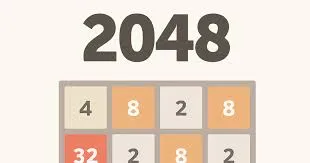
The 4x4 grid is the game’s defining constraint. With only 16 available cells, the system forces constant spatial compromise. Every swipe shifts all tiles simultaneously, making each action globally impactful.
Unlike puzzle games with isolated moves, 2048 enforces board-wide consequences. Movement is irreversible. Random tile spawning introduces stochastic pressure.
Grid Characteristics
- Fixed 16-tile limit
- Directional global movement
- Post-move random tile generation
- No undo in original design
Controlled Chaos
The random appearance of 2s and occasional 4s injects unpredictability, ensuring no two sessions are identical.
3. Exponential Growth and Mathematical Seduction
The numbers in 2048 double sequentially. This simple exponential growth creates psychological momentum. Each merge feels meaningful because it visibly increases magnitude.
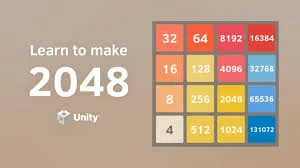
Reaching 128 feels significant. Reaching 512 feels monumental. Yet the jump from 1024 to 2048 represents the same structural doubling as 2 to 4.
Exponential Ladder
- 2
- 4
- 8
- 16
- 32
- 64
- 128
- 256
- 512
- 1024
- 2048
Illusion of Escalation
The exponential system creates perceived acceleration while mathematically remaining consistent.
4. Probability and Random Tile Distribution
After each move, the game spawns a new tile (typically 2, occasionally 4). This probability system determines long-term difficulty scaling.
Because spawning occurs in empty cells, the board gradually becomes more chaotic as space tightens. Random placement prevents deterministic perfection.
Spawn Dynamics
- 90% chance of 2
- 10% chance of 4
- Random empty cell placement
- Increased risk as grid fills
Risk Accumulation
Every merge frees space but also triggers a new tile, creating a constant balance between relief and threat.
5. The Viral Web Phase and Browser Dominance
2048 spread primarily through web sharing. Links circulated across forums and social media. Its lightweight design required no installation.
The lack of monetization made it universally accessible. Players could open a tab, play for minutes, and close it—no commitment required.
Web Distribution Advantages
- Zero cost
- Instant accessibility
- Cross-device compatibility
- Open-source adaptability
Cultural Saturation
Within weeks, thousands of themed variants appeared—letter-based versions, image-based versions, and even parody clones.
6. Mobile Adaptation and Interface Refinement
As mobile usage expanded, 2048 transitioned seamlessly to touchscreens. Swipe mechanics translated naturally to smartphones.
Mobile versions refined animations, smoothing tile transitions and improving visual feedback. Haptic feedback enhanced tactile satisfaction.
Mobile Enhancements
- Fluid swipe responsiveness
- Polished merge animations
- Score tracking
- Local high-score memory
Optimization Over Expansion
Rather than altering core mechanics, developers focused on interface refinement.
7. Emergence of Larger Grids and Extended Goals
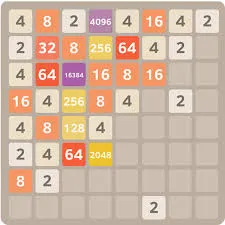
Players eventually surpassed 2048. The game technically continues beyond its title. Tiles such as 4096 and 8192 became attainable milestones.
Some versions introduced 5x5 or larger grids, significantly altering probability dynamics and longevity.
Expanded Variants
- 4096 target
- Endless mode
- Larger grid sizes
- Time-based challenges
Scaling Complexity
Larger grids reduce early pressure but extend endgame duration, reshaping pacing.
8. Artificial Intelligence and Solver Analysis
As popularity grew, programmers began creating AI solvers. These algorithms revealed optimal structural patterns and exposed the game’s mathematical predictability under controlled conditions.
AI demonstrated that with consistent board structuring, extremely high tiles are statistically achievable.
AI Insights
- Corner anchoring strategy dominance
- Monotonic row optimization
- Heuristic evaluation functions
- Near-deterministic high-tile outcomes
Human vs Machine
Where humans struggle with randomness, algorithms treat probability as manageable data.
9. Psychological Loop: Satisfaction and Frustration
2048 operates on short feedback cycles. Merges produce immediate reward signals—visual expansion, score increase, spatial clearing.
Simultaneously, late-game stagnation creates tension. A single poorly aligned tile can destabilize the board.
Psychological Triggers
- Immediate merge gratification
- Clear visual progression
- Sudden gridlock risk
- Short session replayability
Compulsion Through Clarity
The rules are instantly understandable, making failure feel self-inflicted rather than unfair.
10. Legacy: Minimalism as Timeless Design
Years after its release, 2048 remains referenced in discussions about minimalist design excellence. It demonstrated that depth does not require complexity.
Educational institutions use it to teach algorithms. Developers analyze it as a case study in exponential systems and probability-driven puzzles.
Lasting Contributions
- Open-source culture impact
- Mathematical transparency
- Browser-first distribution model
- Demonstration of exponential engagement loops
Enduring Simplicity
2048 persists because its system is pure: a confined grid, doubling numbers, and inevitable entropy.
Conclusion
2048 evolved from a small open-source browser experiment into one of the most studied minimalist puzzle systems of the digital era. Its 4x4 grid structure, exponential number progression, probability-based spawning, and spatial compression mechanics created a deceptively deep framework. Over time, mobile adaptations, larger grid variants, AI analysis, and viral distribution expanded its cultural reach without altering its essential simplicity. The game’s true brilliance lies not in visual spectacle but in mathematical elegance. Within sixteen squares, it compresses tension, growth, entropy, and reward into a self-contained system that continues to captivate players years after its creation.