.webp)






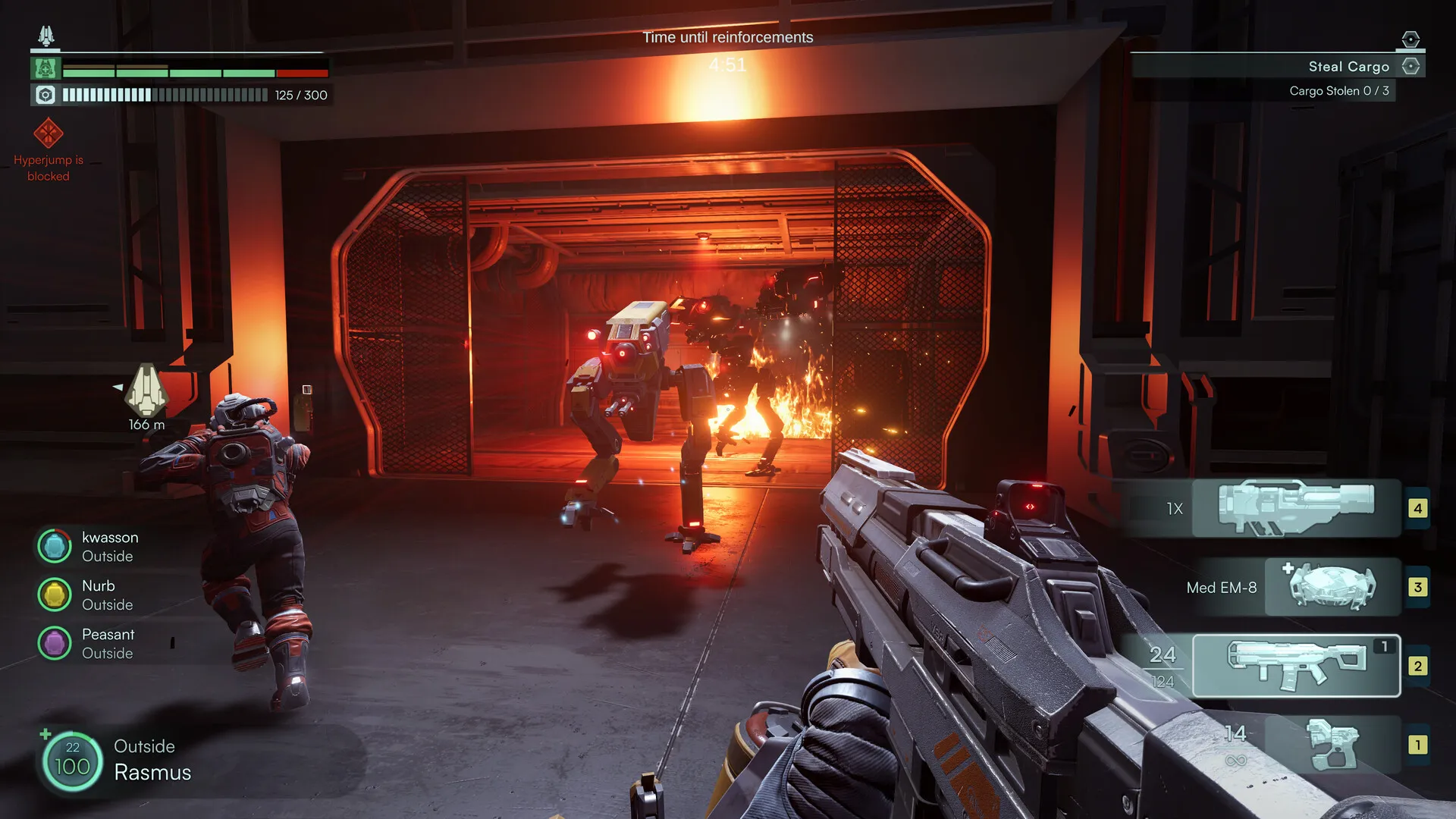
In recent years, sci-fi survival games have increasingly shifted toward open-ended exploration, player-driven storytelling, and immersive worldbuilding. Jump Space emerges as one of the more intriguing entries in this evolving genre, combining deep space exploration with survival mechanics, narrative mystery, and strategic ship management.
Set in a distant future where humanity has begun experimenting with unstable faster-than-light travel, Jump Space places players in a hostile and unpredictable universe. The game revolves around a dangerous technology known as Jump Drives, capable of transporting ships across vast distances instantly, but with consequences that are not fully understood.
Instead of presenting a clean, optimistic vision of space exploration, Jump Space leans heavily into uncertainty. Each jump into the unknown carries risk. Navigation systems fail, anomalies appear, and entire crews may vanish without explanation. Survival is not just about managing oxygen or fuel. It is about understanding a universe that does not behave consistently.
This article explores the systems, narrative design, exploration mechanics, and core identity of Jump Space, highlighting what makes it stand out among modern sci-fi survival experiences.
A Universe Built on Risk and Discovery
The Concept of Jump Travel
At the center of Jump Space is the concept of jumping between distant regions of space using experimental technology. Unlike traditional warp systems in sci-fi games, jumps in this universe are unstable and unpredictable.
Each jump may result in:
- arrival at an unintended location
- ship system malfunctions
- exposure to unknown cosmic anomalies
- encounters with hostile or unknown entities
This unpredictability transforms space travel into a core gameplay challenge rather than a simple transportation mechanic.
Exploration Without Certainty
Exploration in Jump Space is not about filling out a map or completing objectives in a linear fashion. Instead, players chart their own path through procedurally influenced sectors filled with abandoned stations, drifting wreckage, and unexplained phenomena.
The game avoids excessive guidance, encouraging players to:
- investigate signals
- follow distress beacons
- explore derelict structures
- decode alien transmissions
Every discovery carries both reward and potential danger.
Ship Management as Survival Core
Your Ship as Your Lifeline
In Jump Space, the player’s ship is not just a vehicle. It is a fully interactive survival system. Every component must be maintained, upgraded, and monitored.
Key systems include:
- oxygen supply
- power distribution
- navigation and sensors
- life support
- weapon systems
Damage to any system can create cascading problems that threaten survival.
Resource Management in Deep Space
Resources are limited and often difficult to obtain. Players must carefully manage:
- fuel for jump drives
- repair materials
- food supplies
- energy reserves
Running out of resources in deep space can be fatal, especially if the ship becomes stranded far from known locations.
Narrative Through Isolation and Discovery
A Story Told Through Fragments
Like many modern sci-fi survival games, Jump Space uses environmental storytelling rather than direct exposition. The main narrative unfolds through logs, recordings, and discoveries scattered across space.
Players may uncover:
- crew diaries from lost ships
- scientific reports about failed jump experiments
- emergency transmissions from stranded survivors
- encrypted messages hinting at larger conspiracies
This fragmented storytelling creates a sense of mystery that unfolds gradually.
The Psychological Impact of Isolation
Isolation plays a major role in the game’s tone. Long stretches of quiet travel, punctuated by sudden anomalies or encounters, create a rhythm that mirrors real psychological stress.
Players may begin to question:
- whether anomalies are real or sensor errors
- if transmissions are genuine or artificial
- whether their own systems are functioning correctly
This uncertainty adds a psychological horror layer to the experience.
Exploration of Anomalies and Unknown Phenomena
Cosmic Anomalies
One of the most compelling aspects of Jump Space is the variety of anomalies that players can encounter.
Examples include:
- spatial distortions that bend navigation paths
- time anomalies that affect ship systems
- energy fields that disable equipment
- unknown structures that defy known physics
Each anomaly presents a unique challenge, often requiring experimentation to understand.
Alien Presence or Something Else
As players progress, they begin to encounter signs that humanity may not be alone in the universe.
However, the game avoids clear explanations. Instead, it presents ambiguous evidence:
- unidentified signals
- structures with no known origin
- patterns that suggest intelligence
This ambiguity strengthens the sense of mystery and tension.
Combat and Threat Management
Ship-Based Combat
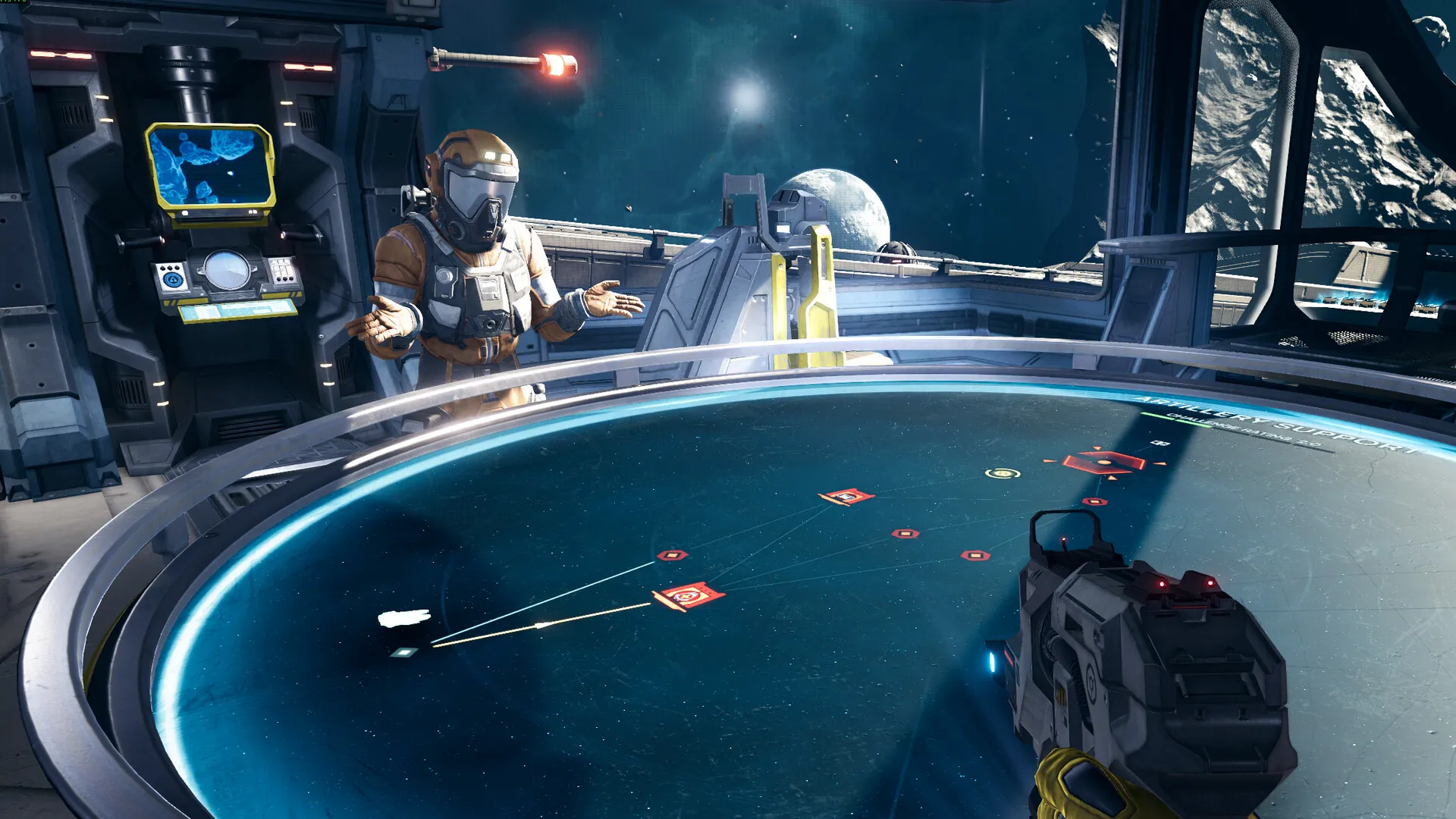
Combat in Jump Space is primarily ship-based. Players may encounter hostile factions, rogue AI-controlled vessels, or unknown entities.
Combat requires careful resource allocation, as weapons consume power and ammunition.
Key considerations include:
- targeting enemy systems
- managing shield strength
- balancing offense and defense
- conserving energy for emergencies
Avoidance as Strategy
In many situations, avoiding conflict is the safer option. Stealth systems, evasive maneuvers, and careful navigation can allow players to bypass dangerous encounters.
This reinforces the survival aspect of the game.
Procedural Systems and Replayability
Dynamic Sector Generation
The game uses procedural elements to generate sectors, ensuring that no two playthroughs are exactly the same.
This includes:
- different anomaly placements
- varied resource distribution
- unique encounter scenarios
Players cannot rely on memorization, which keeps exploration fresh.
Emergent Gameplay
Because systems interact dynamically, unexpected situations can arise.
For example:
- a damaged jump drive may force an emergency landing in an unknown region
- a distress signal may lead to an ambush
- a resource shortage may require risky exploration
These emergent scenarios create memorable gameplay moments.
Visual Design and Atmosphere
Minimalist Space Aesthetic
Unlike highly stylized sci-fi games, Jump Space adopts a more grounded visual style. Space is vast, dark, and often empty, emphasizing isolation.
Ships and stations appear worn and functional rather than futuristic and pristine.
Lighting and Environmental Effects
Lighting plays a major role in establishing mood. Interior ship lighting reflects system status, while external environments use subtle effects to highlight anomalies.
The result is an atmosphere that feels both realistic and unsettling.
Sound Design and Immersion
Silence and Subtle Audio
Sound design in Jump Space relies heavily on silence. Long periods without noise create tension, making sudden sounds more impactful.
Players may hear:
- faint system hums
- distant signal interference
- warning alarms
- unexplained audio distortions
Dynamic Audio Feedback
Audio cues also provide important gameplay information. Changes in sound may indicate system damage or nearby threats.
This makes sound an essential tool for survival.
Strengths and Challenges
Strengths
Jump Space stands out for several reasons:
- deep and immersive survival mechanics
- strong sense of isolation and tension
- meaningful exploration systems
- dynamic and unpredictable gameplay
Challenges
However, the game may not appeal to all players.
Some potential challenges include:
- slow pacing
- limited direct guidance
- steep learning curve
- heavy reliance on player interpretation
These elements may feel overwhelming for players seeking faster-paced experiences.
The Future of Jump Space
Potential for Expansion
Given its strong foundation, Jump Space has potential for future expansion.
Possible additions could include:
- multiplayer cooperative exploration
- expanded narrative arcs
- new anomaly types
- advanced ship customization
A Growing Sci-Fi Survival Genre
The game contributes to a growing trend of immersive, systems-driven sci-fi experiences that prioritize player agency over scripted storytelling.
Conclusion
Jump Space represents a compelling evolution of the sci-fi survival genre. By focusing on uncertainty, isolation, and systemic gameplay, it creates an experience where every decision matters and every journey carries risk.
Rather than guiding players through a predefined narrative, the game invites them to explore, experiment, and uncover its mysteries at their own pace. The combination of ship management, anomaly exploration, and psychological tension makes it a standout title for players seeking a deeper and more immersive space experience.
For those willing to embrace its slower pacing and demanding systems, Jump Space offers a journey into the unknown that is as unsettling as it is unforgettable.