







Mastering the Brick-Built Cosmos: A Deep Guide to Optimization in LEGO® Voyagers
The arrival of LEGO® Voyagers has redefined the intersection of digital building and tactical exploration. Unlike its predecessors, which often focused on linear storytelling, Voyagers demands a high-level understanding of "Elemental Brick Synergy" and "Micro-Build Efficiency." To succeed in the later sectors of the game, players cannot simply rely on the aesthetic of their ships; they must treat every 1x1 plate and specialized technic connector as a variable in a complex survival equation. This guide moves beyond the basics to explore the deep-layer mechanics of ship-to-surface interaction and the mathematical optimization of your Minifigure crew.
The Foundation: Pre-Flight Brick Budgeting and Loadout Geometry
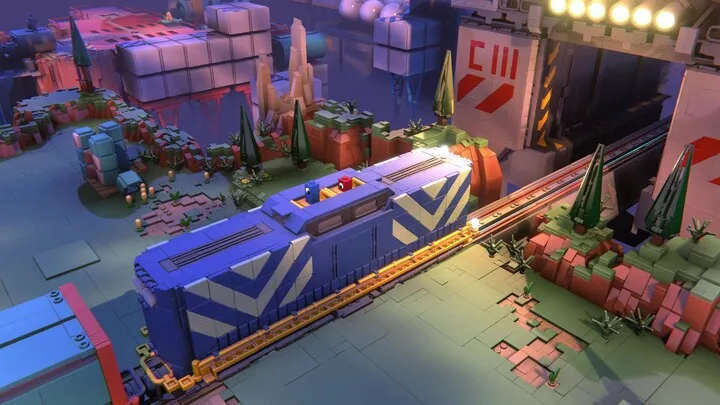
Before you even ignite your ion thrusters, the game’s "Mass-to-Power Ratio" begins to dictate your success. In LEGO® Voyagers, every brick added to your vessel has a specific weight value that impacts your fuel consumption and atmospheric maneuverability. High-tier players utilize a "Skeletonized" building approach, where the internal structure of the ship uses lightweight Technic beams, reserving the heavier, more durable 2x4 bricks for external hull plating. This ensures that you have the agility to dodge space debris while maintaining the structural integrity required for planetary entry.
Furthermore, the geometry of your build determines your "Hitbox Efficiency." A sleek, triangular ship might look impressive, but it creates "Snag Points" during asteroid belt navigation. The most effective guides suggest a "Modular Core" design—building your ship in detachable 8x8 studs segments. This allows you to jettison non-essential rooms, such as the galley or the trophy hall, if your life support systems are compromised during a deep-space anomaly.
Essential Loadout Metrics
- Stud-to-Weight Ratio: Aim for a 10:1 ratio of propulsion power to total brick mass.
- Component Redundancy: Always hide a secondary "Emergency Cockpit" within the mid-section of your build.
- Aura Buffs: Ensure your Minifigure captain is within three studs of the primary Navigation Console to trigger the "Veteran Pilot" speed boost.
Early Game: Maximizing Planetary Extraction and Biome Scanning
The first ten hours of LEGO® Voyagers are won or lost in the "Resource Loop." When you land on a new planet, such as the neon-soaked jungles of Felucia-Prime, your primary goal is to deploy "Micro-Miners." These are small, 20-piece autonomous builds that can be left on a planet's surface while you explore orbit. To optimize this, you should focus on the "Bane of the Prospector" guide: never mine manually when you can automate. Using transparent-colored bricks for your sensors increases the scan radius of these bots, allowing you to locate rare "Golden Bricks" hidden deep within the procedural terrain.
Environmental hazards like acidic rain or volcanic ash require specific "Shield-Tiling." If you are exploring a fire biome, your ship’s underbelly should be coated in "Trans-Orange" elements, which the game’s engine recognizes as heat-resistant. Scanning these biomes isn't just about discovery; it’s about "Acoustic Mapping." By staying silent and using low-vibration thrusters, you can detect subterranean caverns that contain the blueprints for the "Hyper-Drive Mark II," an essential upgrade for mid-game progression.
Minifigure Synergy: Balancing Class Skills and Emotional Resonance
One of the most overlooked aspects of LEGO® Voyagers is the "Minifigure Chemistry" mechanic. Every crew member belongs to a class—Engineer, Explorer, Defender, or Scientist—but they also possess hidden "Personality Studs." If you pair a "Grumpy" Engineer with a "Cheerful" Scientist in the same laboratory module, their productivity drops by 15%. A deep-dive guide into crew management reveals that "Neutral" Minifigures are actually the most valuable for long-term voyages as they provide a stable baseline for the ship’s "Morale Meter."

To maximize your research output, you must build "Synergy Rooms." For example, placing a Telescope next to a Coffee Machine increases the Scientist’s "Focus" stat, allowing them to decode alien blueprints 20% faster. Advanced players use the "Rotation Method," swapping crew members between the bridge and the breakroom to prevent "Brick-Burnout." Remember, a stressed Minifigure is more likely to cause a "build-failure," where ship components spontaneously disassemble during high-speed maneuvers.
Top-Tier Crew Combinations
- The Classic Duo: An Astronaut and a Space Police Officer grant a 10% boost to pirate evasion.
- The Tech Team: Two Blacktron-era Engineers double the repair speed of solar panels.
- The Research Council: Three different Scientist variants (Arctic, Space, and Lab) unlock the "Universal Theory" buff, revealing all map icons.
Mid-Game: Navigating the Trade Hubs and Stud Inflation
As you enter the "Central Ring" sectors, the game’s economy becomes the primary hurdle. Studs—the universal currency—undergo a "Market Volatility" phase. A deep guide to trading suggests hoarding "Transparent-Blue" elements, as their value skyrockets in the water-dominated sectors of the second galaxy. Instead of selling your rare bricks immediately, use a "Display Case" build in your ship to increase the "Prestige" of your vessel, which lowers the prices at galactic trade hubs.
The "Stud-Multiplier" mechanics in Voyagers are tied to "Creative Combos." During space combat or resource gathering, performing a "Perfect Snap"—placing or repairing a brick perfectly during a timed event—triggers a multiplier. Managing your "Stud Wallet" is critical; high-level players suggest keeping a reserve of at least 50,000 studs before attempting to pass through the "Toll Gates" of the Nebula Sector. If you find yourself short on funds, look for "Bounty Builds"—small, requested objects you can build and deliver to NPCs for massive payouts.
Combat Optimization: Tactical Disassembly and Rebuild Speed
In LEGO® Voyagers, space combat isn't about depleting a health bar; it’s about "Tactical Deconstruction." Enemy ships are held together by virtual clutch power. If you target the "Key Joints" (usually where wings connect to the fuselage), you can shatter an entire vessel with a single well-placed proton torpedo. A sophisticated combat guide emphasizes the "Snatch-and-Grab" technique: using a grapple beam to steal the enemy’s weapons mid-fight and instantly "snapping" them onto your own ship to gain the upper hand.
Your "Rebuild Speed" stat is arguably more important than your armor. When your ship takes damage, bricks will fly off and float in the surrounding space. If your Minifigure Engineer has a high "Dexterity" score, they can pull these pieces back in and repair the hull in real-time. This creates a high-stakes mini-game where you must fly through your own debris to "heal" your ship. Defensive players should build "Ablative Armor"—thin layers of 1x2 plates that are designed to fall off, preserving the expensive core components beneath.
Advanced Combat Tactics
- The "Brick-Cloud": Jettisoning a cargo hold full of 1x1 studs to confuse enemy heat-seeking missiles.
- The "Spin-Jitzu" Maneuver: Rotating your ship rapidly to distribute damage across all hull plates evenly.
- EMP Bricks: Using Blue Technic Pins to create a custom "Shock-Net" that disables enemy engines.
The Art of the "Micro-Ship": Stealth and Infiltration Mechanics
There are sectors in the game, specifically the "Imperial Void," where massive cruisers are easily detected and destroyed. In these scenarios, the guide recommends "Micro-Scaling." By building a ship that is no larger than 10x10 studs, you gain a massive "Stealth" bonus. These micro-ships have lower power outputs but can navigate through the cooling vents of enemy space stations, allowing you to bypass entire fleets without firing a single shot.
Micro-building requires a shift in mindset. You must use "SNOT" (Studs Not On Top) techniques to create high-detail, low-profile shapes. Every piece must serve two purposes: a wing must also be a heat sink, and the pilot's seat must double as the fuel tank. While micro-ships are fragile, their "Evasion Stat" is so high that skilled pilots can dance between laser fire with ease. This is the preferred method for "Ghost Run" achievements and high-stakes sabotage missions.
Late Game: Master-Building and the "Infinite Blueprint" Engine
When you reach the "Core Galaxy," the game unlocks the "Master Builder" ability. This allows you to pause time and construct complex structures from raw bricks in your inventory. A deep-tier guide for late-game play focuses on "Blueprint Optimization." Instead of building from scratch, you should have a library of "Instant-Builds"—pre-designed turrets, bridges, and defensive walls—that you can spawn into the world to change the environment to your advantage.
The "Infinite Blueprint" engine rewards players who have scanned every unique piece in the game. By collecting rare elements like the "Chrome Gold Lightsaber Hilt" or the "Printed Solar Tile," you unlock high-tier blueprints that defy the standard laws of physics. At this level, your ship should be a "Transforming Vessel," capable of shifting from a heavy tank to a high-speed racer at the press of a button. This fluidity is the hallmark of a true LEGO® Voyager.
Deep-Space Logistics: Fuel Cells and Life Support Management

In the endgame "Void Zones," there are no trade hubs or friendly planets. Your survival depends entirely on "Logistical Loops." You must build an "On-Board Bio-Dome" to generate oxygen and food for your Minifigures. The guide for these zones is simple: "Waste Nothing." Even the "stud-dust" generated from mining should be recycled through a "Brick-Compressor" to create new building materials.
Managing your "Ion Fuel Cells" becomes a constant puzzle. You can increase fuel efficiency by painting your ship white (which the game simulates as reflecting cosmic radiation for a small heat-reduction bonus). If you run out of fuel in deep space, you are forced into the "Drift Mechanic," where you must use your EVA suits to manually push your ship toward the nearest gravitational well. It is a slow, grueling process that reinforces the importance of careful planning and resource hoarding.
Void Survival Checklist
- Bio-Dome Integrity: Check for cracks in the glass every 5 minutes of real-world play.
- Battery Banks: Ensure you have at least 3 "Super-Charge" batteries in the cargo hold.
- Emergency Beacon: Build a high-gain antenna using 4 "Satellite Dish" pieces for long-range SOS signals.
Genetic Brick Modification: Enhancing the Rarity of Your Build
The most advanced players engage in "Genetic Modification" of their bricks using the "Alchemy Lab" build. This allows you to infuse standard bricks with elemental properties found in the far reaches of the galaxy. A "Cryo-Infused" brick, for instance, will never overheat, even when placed next to a fusion reactor. This deep-layer mechanic allows for "Illegal Building Techniques"—connections that would normally be too fragile are reinforced by elemental magic.
This guide suggests focusing your "Alchemy" on your thrusters and weapons first. An "Ice-Laser" does more damage to "Sun-Dwellers," while a "Flame-Shield" is essential for the "Obsidian Belt." By modifying the very "DNA" of your LEGO® pieces, you transcend the limitations of the standard catalog. It is a time-consuming process that requires "Nebula Essence," but the resulting "Prismatic Bricks" are the strongest elements in the entire game.
Conclusion: The Philosophy of the Infinite Builder
LEGO® Voyagers is not merely a game of exploration; it is a testament to the power of structured creativity. Success in the brick-built cosmos requires a balance of engineering precision, economic foresight, and tactical adaptability. By mastering the "Heritage Simmer" of your ship’s production, optimizing your crew’s emotional chemistry, and embracing the "Tactical Disassembly" of combat, you become more than a player—you become an architect of the stars. The journey through the LEGO® universe is infinite, but with these deep strategies, your legacy will be as enduring as a 2x4 brick. Whether you are building for speed, stealth, or sheer power, remember that every stud counts, and the greatest tool in your inventory is your own imagination.