Match Factory News Analysis: The Difficulty Progression Controversy and How It Is Reshaping the Future of Puzzle Design
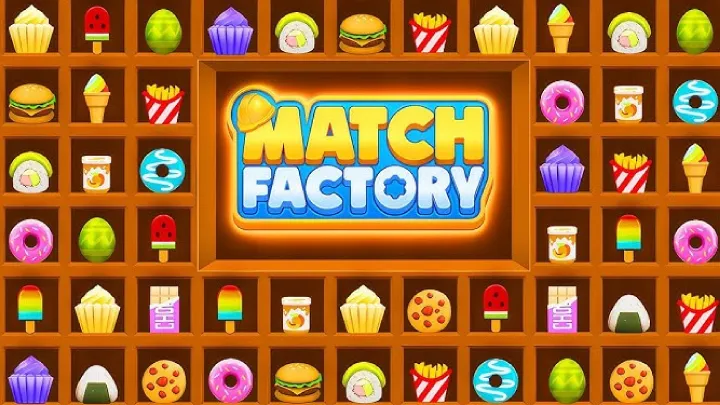
In Match Factory, one of the most significant news topics discussed by players throughout recent updates is the ongoing controversy surrounding difficulty progression balancing. While Match Factory initially gained popularity because of its accessible object-matching gameplay, many veteran players have noticed major changes in how levels are structured, how obstacles are introduced, and how progression speed has evolved.
The discussion is no longer simply about whether a level is hard or easy. Instead, players are debating whether the game's modern progression system is designed to encourage skill development or to create artificial roadblocks that slow advancement. Community forums, social media discussions, and content creators have repeatedly highlighted concerns about increasing level complexity, limited move efficiency, event-related progression pressure, and the role of boosters in overcoming difficult stages.
This issue has become one of the most important news stories surrounding Match Factory because it directly affects every player, from casual puzzle fans to highly competitive event participants. Understanding how difficulty progression evolved and why it has become controversial offers valuable insight into the future direction of the game.
How Match Factory's Early Difficulty Model Built Its Player Base
When Match Factory first attracted large audiences, its difficulty curve was relatively straightforward.
Players were introduced to object matching mechanics gradually. New obstacles appeared one at a time, allowing users to understand each system before additional layers of complexity were added.
The original progression philosophy
Early levels emphasized learning
Players focused on:
- Object recognition
- Speed development
- Basic prioritization
- Simple board awareness
Mistakes felt educational
Failure usually taught a specific lesson rather than creating frustration.
As a result, players felt responsible for their success and failures, creating a strong sense of progression.
Why the early model worked
The original difficulty structure rewarded observation and practice. Players improved naturally as levels became more demanding, creating a satisfying learning curve that encouraged long-term engagement.
The Shift Toward More Aggressive Difficulty Scaling
As the game matured, developers began introducing more advanced challenge systems.
Levels became larger, object density increased, and visual clutter became more common.
What changed in later updates
Several systems began appearing more frequently:
Multi-layer object stacks
Items hidden beneath multiple layers increased search difficulty.
Increased object similarity
Visual distinctions between items became less obvious.
Reduced error margins
Players had fewer opportunities to recover from mistakes.
Community reaction
Many players appreciated the increased challenge initially.
However, concerns emerged when difficulty spikes began appearing abruptly rather than gradually.
Why Difficulty Spikes Became a Major Community Discussion
A gradual increase in challenge feels rewarding.
A sudden increase often feels unfair.
What players started noticing
Many users reported reaching levels where:
- Completion rates dropped sharply
- Time pressure increased significantly
- Booster usage became more common
The perception problem
The issue wasn't necessarily that levels became harder.
The concern was that difficulty sometimes appeared inconsistent.
Example scenario
A player might complete ten levels comfortably and then encounter a stage that felt dramatically more demanding than previous levels.
Why this matters
Perceived fairness is often more important than actual difficulty.
Players tolerate difficult challenges when progression feels logical.
The Growing Debate Around Booster Dependency
One of the most controversial news topics surrounding Match Factory involves booster usage.
The original role of boosters
Boosters were designed as optional assistance tools.
Examples included:
- Extra time
- Object reveals
- Board-clearing abilities
How perceptions changed
As difficulty increased, some players began feeling that boosters were becoming increasingly necessary.
Community concerns
- Were levels balanced around booster ownership?
- Could skill alone overcome later challenges?
- Were events encouraging excessive resource spending?
Why the debate continues
Supporters argue boosters simply accelerate progress.
Critics argue they increasingly influence progression success.
How Limited-Time Events Amplified Difficulty Concerns
Special events became central to player engagement.
Benefits of event systems
Events provide:
- New rewards
- Competitive goals
- Community excitement
The challenge
Event progression often requires rapid level completion.
Consequences
Players may encounter:
- Increased grinding pressure
- Reduced experimentation
- Greater frustration during difficult stages
Community perspective
Many players enjoy event participation but dislike feeling forced to complete challenging levels quickly to remain competitive.
The Role of Data Analytics in Modern Difficulty Design
Modern mobile games rely heavily on player data.
Match Factory is no exception.
What developers can measure
Analytics provide information about:
- Completion rates
- Failure rates
- Booster usage
- Session length
Benefits of analytics
Developers can identify:
Overly easy levels
Stages completed too quickly.
Overly difficult levels
Stages with unusually high failure rates.
The controversy
Players sometimes worry that optimization based on analytics may prioritize engagement metrics over player enjoyment.
How Difficulty Changes Affect Different Types of Players
Not all players experience progression in the same way.
Casual players
Casual users typically seek:
- Relaxation
- Consistent advancement
- Light challenge
Competitive players
Competitive users often prefer:
- Complex puzzles
- Efficiency optimization
- High-skill gameplay
The balancing challenge
A level that feels exciting for competitive players may feel exhausting for casual users.
Key insight
The difficulty controversy exists partly because Match Factory serves multiple audiences simultaneously.
Community Feedback and Developer Responses
As discussions intensified, developers began responding more actively.
Common developer actions
Level adjustments
Some stages received balancing changes.
Event modifications
Reward structures occasionally evolved.
Quality-of-life improvements
User interface changes helped reduce frustration.
Why communication matters
Players are generally more accepting of difficulty when developers explain their design goals clearly.
Ongoing challenge
Balancing transparency with ongoing development flexibility remains difficult.
What Future Difficulty Systems Might Look Like
The controversy has sparked numerous community suggestions.
Frequently requested improvements
Adaptive difficulty systems
Levels adjust based on player performance.
Multiple challenge modes
Separate experiences for casual and competitive users.
Alternative progression paths
Allow players to bypass certain bottlenecks.
Potential benefits
These systems could reduce frustration while preserving challenge.
Potential risks
Too much flexibility might weaken the sense of achievement associated with difficult victories.
Why This News Story Matters for the Long-Term Future of Match Factory
Difficulty balancing is not simply a gameplay issue.
It affects nearly every aspect of the player experience.
Systems influenced by difficulty
- Retention
- Progression
- Events
- Monetization
- Community sentiment
What the controversy reveals
Players care deeply about fairness.
They want:
- Meaningful challenges
- Consistent progression
- Transparent design decisions
Final insight
The ongoing difficulty progression debate is ultimately a discussion about trust between developers and players. How Match Factory evolves this system may determine its long-term success more than any individual feature update.
Conclusion
The difficulty progression controversy has become one of the most important news issues in Match Factory because it directly affects how players experience every aspect of the game. What began as a discussion about challenging levels has evolved into a broader debate involving progression pacing, booster dependency, event participation, player retention, and long-term game design philosophy. While some players welcome increasingly complex puzzles, others worry about abrupt difficulty spikes and progression barriers. As developers continue refining level balance and event systems, the future of Match Factory will likely depend on finding the right equilibrium between challenge and accessibility. The outcome of this debate could shape not only future updates but also the identity of the game itself for years to come.